[Discipline 01]
Character & Creature Concept Art
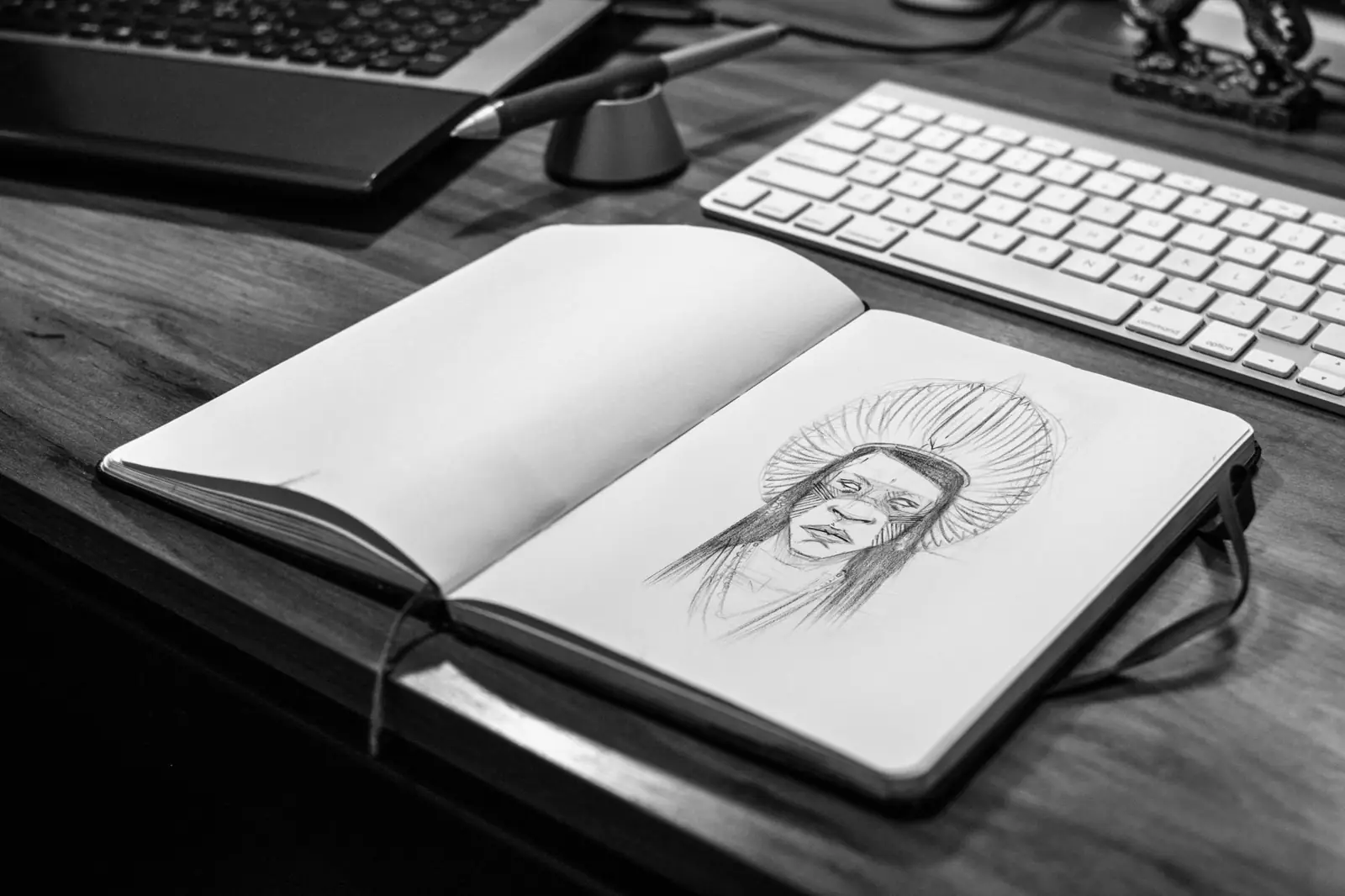
Characters that read in silhouette, survive the trip to 3D, and arrive with every view, expression and material a modeller needs.
[Process]
From silhouette to production sheet
1. Ideation silhouettes
We start in pure black shapes, usually 12–30 per character. A silhouette that cannot be told apart from the rest of the cast at a glance will not be told apart in gameplay either. You pick two or three to push.
2. Costume, anatomy and colour exploration
The chosen silhouettes get costume logic, anatomy and colour variations: faction colours, wear, era, culture. For creatures this is where we solve how the thing moves, eats and fights, because believable anatomy is what makes a creature rig without hacks.
3. Design lock
One polished front view in final colour, with material notes. This is the version that goes in the pitch deck or art bible, and the point after which changes count as a new round.
4. Orthographic turnaround
Front, side, three-quarter and back views on one proportion grid, in A-pose or T-pose as your rigger prefers. A-pose is the modern default for most humanoid rigs because it deforms the shoulders more cleanly; we follow your pipeline either way.
5. Expression sheets and callouts
Head turnarounds and six to twelve expressions where faces matter. Callouts break out armour layering, fabric types, buckles and straps, PBR material intent (metalness, roughness, wear zones) and any detail too small to read in the full turnaround.
Creature specifics
Creature sheets add a skeletal and muscle read, a scale comparison against a 1.8 m human, an open-mouth view and notes on locomotion. They take longer, which is why creature sheets sit at the top of the price table.
[Tiers]
Deliverable tiers and pricing
Per-character ranges at studio rates. Artist-days are what the budget estimator uses; prices vary with style complexity and the rate benchmark.
| Tier | Includes | Artist-days | Typical range |
|---|---|---|---|
| Rough exploration | Silhouette sheet, 2–3 rough colour passes | 0.5 – 0.8 | $150 – $400 |
| Design lock | Polished front view in final colour, material notes | 1.0 – 1.5 | $400 – $1,200 |
| Production turnaround package | 4-view turnaround, expression sheet, material callouts, layered PSD | 1.8 – 2.5 | $800 – $1,500+ |
| Creature production sheet | Turnaround, anatomy read, scale comparison, mouth and locomotion notes | 2.0 – 3.0 | $500 – $1,500+ |
[Common mistakes]
What makes character work expensive
- Skipping silhouettes. Teams that start at a polished render discover readability problems in engine, when fixing them means remodelling.
- Turnarounds that do not line up. If the knee is at a different height in front and side views, the modeller has to guess. Ours share one grid.
- No material intent. "Leather" is not a callout. Grain, wear zones, stitching and roughness range are.
- Late cast changes. Adding a faction after design lock reopens every other character's colour logic. Lock the cast list at Gate 1.